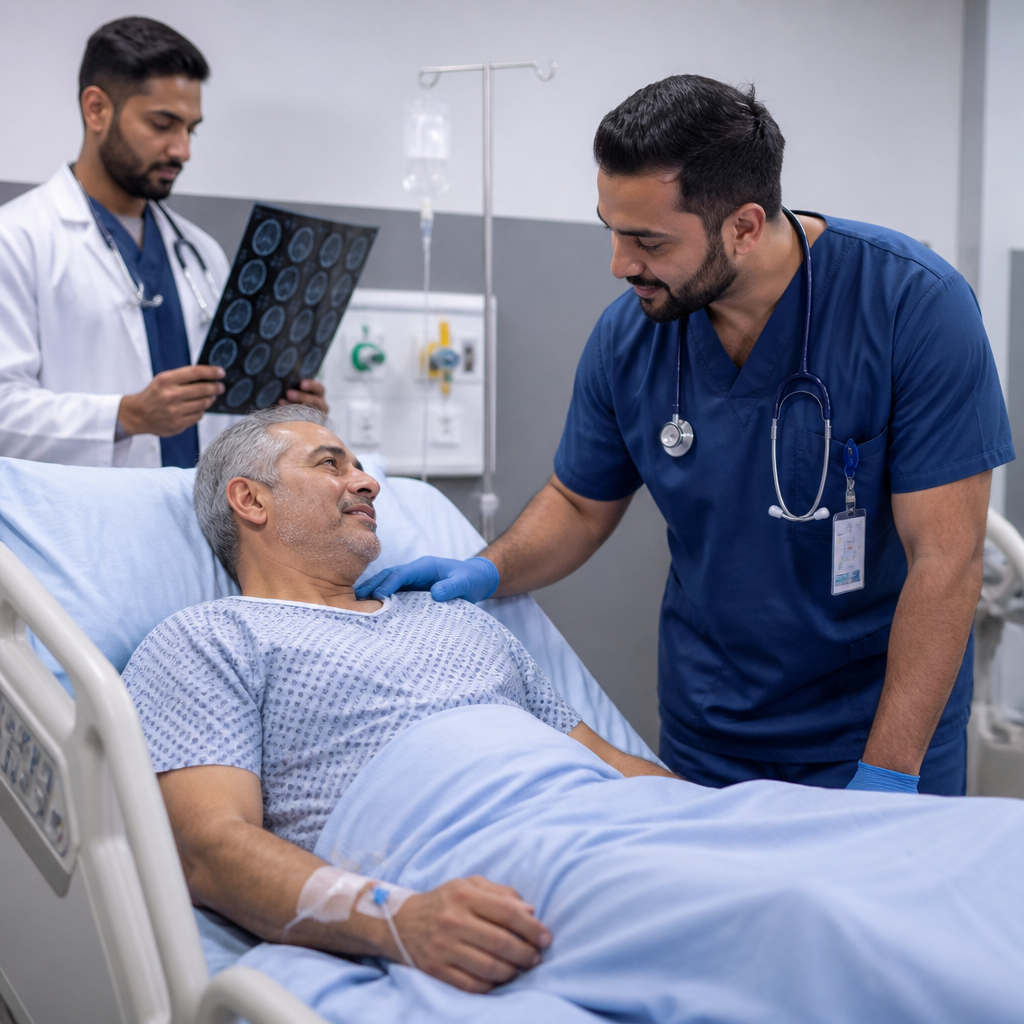
Neurology, Nursing, and Living Donation: How Modern Healthcare Connects Specialties to Save Lives

Modern medicine rarely operates in isolation. The most impactful patient outcomes emerge when multiple disciplines — neurology, nursing, transplant medicine, and patient advocacy — converge around a shared goal: preserving and improving human life. Understanding how these fields interact not only helps patients navigate complex health systems but also empowers healthcare professionals to deliver more coordinated, compassionate care. From diagnosing rare neurological disorders to supporting organ donation decisions, the connections between medical specialties are deeper and more consequential than most people realize.
The Growing Importance of Neurological Care in Comprehensive Health Systems
Neurological conditions — ranging from epilepsy and multiple sclerosis to stroke and Parkinson’s disease — affect hundreds of millions of people worldwide. As populations age and lifestyle-related risk factors increase, the demand for specialized neurological expertise has never been greater. Neurology sits at the intersection of diagnosis, long-term management, and emergency intervention, making it one of the most demanding and consequential branches of medicine.
What makes neurological care particularly complex is the brain’s intimate relationship with virtually every other organ system in the body. A patient recovering from a kidney transplant may experience neurological side effects from immunosuppressive medications. Someone with advanced liver disease may develop hepatic encephalopathy, a condition that directly impairs brain function. These overlapping realities mean that neurologists must often collaborate closely with transplant teams, intensivists, and nursing staff to deliver holistic care.
Why Specialist Access Matters for Patient Outcomes
Access to a qualified neurologist is not a luxury — it is a clinical necessity for millions of patients. Delayed diagnosis of conditions like stroke or autoimmune encephalitis can result in permanent disability or death. Early intervention, guided by expert neurological assessment, dramatically improves prognosis across a wide range of conditions. This is why healthcare systems in the Gulf region and beyond have invested heavily in building world-class neurological institutes capable of handling both routine and highly complex cases.
Consulting a neurologist in abu dhabi at a facility equipped with advanced diagnostic imaging, electrophysiology labs, and multidisciplinary care teams ensures that patients receive not just a diagnosis, but a comprehensive treatment plan tailored to their specific neurological profile. This level of integrated care is particularly vital for patients managing chronic neurological conditions alongside other systemic illnesses.
The Role of Nursing in Bridging Neurological and Transplant Care
Nurses are the connective tissue of any healthcare system. In neurological and transplant settings, their role extends far beyond administering medications or monitoring vitals. Nurses in these environments serve as patient educators, emotional support providers, care coordinators, and clinical observers whose frontline assessments can catch early signs of deterioration that might otherwise go unnoticed.
In transplant units, nurses play a particularly critical role in monitoring for neurological complications post-surgery. Calcineurin inhibitors, commonly used to prevent organ rejection, are known to cause neurotoxicity in some patients, manifesting as tremors, seizures, or even posterior reversible encephalopathy syndrome (PRES). Nurses trained to recognize these presentations can trigger timely neurological consultations that prevent serious harm.
Advancing Nursing Careers to Meet Complex Clinical Demands
As the complexity of patient care increases, so too does the need for highly educated nursing professionals. Distance learning has emerged as a transformative pathway for nurses seeking to advance their qualifications without interrupting their clinical careers. Exploring best distance nursing courses for career growth reveals a landscape of accredited programs that equip nurses with specialized knowledge in areas such as neuroscience nursing, transplant coordination, and critical care — all accessible from anywhere in the world.
This flexibility is especially valuable in regions experiencing rapid healthcare expansion, where the demand for skilled nursing professionals often outpaces the supply of locally available training programs. By investing in advanced education, nurses not only improve their own career trajectories but also elevate the standard of care available to patients in their communities.
Living Donation: A Decision That Requires Multidisciplinary Support
One of the most profound decisions a person can make is to donate an organ while still alive. Living donation — most commonly involving a kidney or a portion of the liver — offers recipients a potentially life-saving gift while allowing donors to witness the impact of their generosity firsthand. However, the process is medically, psychologically, and ethically complex, requiring careful evaluation and ongoing support from a range of healthcare professionals.
Neurological assessment is an often-overlooked component of the living donor evaluation process. Surgeons and transplant coordinators must ensure that potential donors are free from conditions that could increase surgical risk or impair their ability to provide informed consent. Cognitive evaluations, mental health screenings, and assessments for conditions like uncontrolled epilepsy or severe migraines are all part of a thorough pre-donation workup.
Understanding the Living Donation Process
For those considering living donation, understanding the full scope of what the process entails is essential. Comprehensive information about living organ donation and what it involves helps prospective donors make fully informed decisions, covering everything from initial medical screening to long-term follow-up care. Transparency in this process is not just ethically important — it is clinically necessary to ensure donor safety and recipient success.
Transplant teams that include neurologists, psychologists, social workers, and specialized nurses are best positioned to guide donors and recipients through this journey. The interdisciplinary nature of transplant medicine mirrors the broader reality of modern healthcare: no single specialty can address the full complexity of human health alone.
Cleveland Clinic Abu Dhabi’s Neurological Institute: A Center of Excellence
Among the institutions leading the charge in integrated neurological care in the Middle East, Cleveland Clinic Abu Dhabi stands out for its commitment to clinical excellence, research, and patient-centered care. The Neurological Institute at Cleveland Clinic Abu Dhabi brings together a team of internationally trained specialists who manage the full spectrum of neurological conditions — from common disorders like migraines and neuropathy to rare and complex diseases requiring advanced intervention.
The institute’s approach is built on the same multidisciplinary philosophy that defines world-class healthcare: neurologists, neurosurgeons, neuroradiologists, rehabilitation specialists, and nursing teams work in concert to develop individualized care plans for each patient. This collaborative model ensures that no aspect of a patient’s neurological health is addressed in isolation, and that treatment decisions are informed by the broadest possible clinical perspective.
Conclusion: Integration Is the Future of Healthcare
The threads connecting neurology, nursing education, and living organ donation may seem disparate at first glance, but they are united by a common principle: the best healthcare outcomes are achieved through collaboration, specialization, and continuous learning. Whether a patient is seeking expert neurological diagnosis, a nurse is pursuing advanced qualifications to better serve complex patients, or a family is navigating the profound decision of living donation, the quality of care they receive depends on systems and professionals that are deeply interconnected.
Investing in specialist access, nursing education, and transparent patient information is not merely a matter of institutional policy — it is a moral imperative. As healthcare systems around the world continue to evolve, the integration of these disciplines will define the standard of care for generations to come.